When it comes to web development, REST APIs are an essential building block for creating scalable and efficient applications. In this REST API tutorial for Java developers, we will explore the basics of REST APIs, their key features, and why they are crucial in modern software development. By the end of this guide, you’ll have a solid understanding of REST APIs and their role in the Java ecosystem.
What is a REST API?
REST (Representational State Transfer) is an architectural style for designing networked applications. A REST API, therefore, is a web service that adheres to the principles of REST. It enables communication between different systems over the internet using standard HTTP methods such as GET, POST, PUT, and DELETE.

REST Client Server interaction
Key Characteristics of REST APIs:
- Statelessness: REST APIs are stateless, meaning each request from a client to the server must contain all the information the server needs to fulfill the request.
- Client-Server Architecture: REST separates the client (frontend) and server (backend) to allow independent development.
- Cacheability: Responses from REST APIs can be cached to improve performance.
- Uniform Interface: REST APIs follow a consistent set of rules for resource identification, interaction, and representation.
- Layered System: REST APIs can be designed with layers, ensuring scalability and security.
Why REST APIs Are Popular in Java Development
Java has been a cornerstone in enterprise software development for decades. With its robust ecosystem, Java offers numerous frameworks and libraries to create REST APIs, such as Spring Boot and Jakarta EE. Here are some reasons why Java developers prefer REST APIs:
- Ease of Integration: REST APIs simplify integration between Java applications and other systems.
- Scalability: The stateless nature of REST APIs ensures they can handle large-scale applications.
- Framework Support: Java frameworks like Spring Boot provide built-in tools to streamline REST API development.
- Wide Adoption: REST is widely used, making it easy for Java developers to collaborate with other teams.
Also Read: Five minutes guide for creating SOAP web service in Java using Axis2
REST API Tutorial for Java: Key Concepts
To better understand how REST APIs work in Java, let’s break down the core concepts.
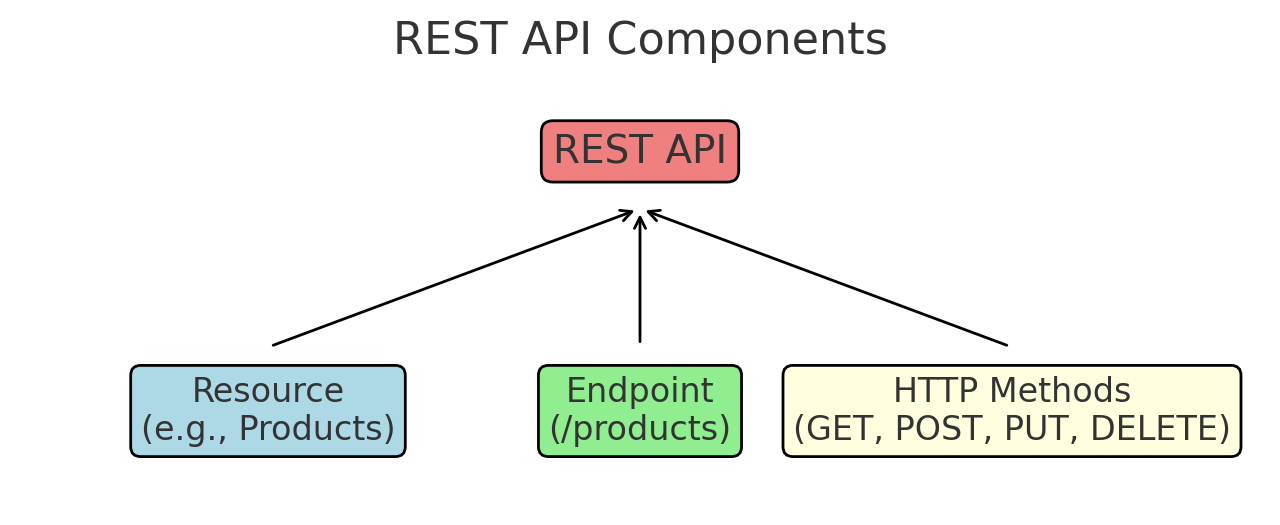
Resources and Endpoints
In REST, everything is treated as a resource. For example, in an e-commerce application, resources could include products, users, and orders. Each resource is identified by a unique URL called an endpoint.
HTTP Methods
REST APIs use standard HTTP methods to perform operations on resources:
- GET: Retrieve data from the server.
- POST: Create a new resource.
- PUT: Update an existing resource.
- DELETE: Remove a resource.
Status Codes
REST APIs rely on HTTP status codes to indicate the outcome of a request. Common codes include:
- 200 OK: Request succeeded.
- 201 Created: Resource successfully created.
- 400 Bad Request: Invalid request from the client.
- 404 Not Found: Resource not found.
- 500 Internal Server Error: Server encountered an error.
Benefits of Using REST APIs in Java Projects
- Interoperability Across Systems: REST APIs enable Java applications to seamlessly interact with services built in other programming languages, ensuring cross-platform compatibility.
- Enhanced Scalability: The stateless design of REST APIs allows applications to handle increased loads efficiently by simply adding more server instances.
- Developer Productivity: Frameworks like Spring Boot provide extensive tools, annotations, and abstractions that make creating and managing REST APIs faster and easier.
- Flexible Data Representation: REST APIs support multiple data formats like JSON, XML, or even plain text, providing flexibility in how data is consumed or transmitted.
- Simplified Maintenance: The uniform interface of REST APIs ensures consistency, making codebases easier to maintain and scale over time.
- Broad Ecosystem Support: With numerous libraries and frameworks, Java developers can leverage well-tested tools to implement features like security, error handling, and testing for REST APIs.
Conclusion
REST APIs are a powerful way to build robust, scalable, and flexible web services. For Java developers, frameworks like Spring Boot make REST API development intuitive and efficient. By mastering the basics covered in this REST API tutorial for Java, you’re well on your way to creating enterprise-grade applications.
As the next step, you can dive into setting up your first Spring Boot project for REST API development!
